






![TCM practitioner Ong Boon Hock (right) gently encouraged a non-verbal girl to try to make sounds, moving her mother deeply. [Photo by Ho Wei Mee]](/images/Articles/YL/2026/KL20260614a_hwm01_092.jpg "TCM practitioner Ong Boon Hock (right) gently encouraged a non-verbal girl to try to make sounds, moving her mother deeply. [Photo by Ho Wei Mee]")
At Tzu Chi’s free clinic in Lahad Datu, medical care became more than just treatment. For a woman living with years of pain, it offered renewed hope. For a mother longing to hear her daughter’s voice, it brought a glimmer of hope. And for a doctor who stepped into a patient’s home, it revealed the hardship behind physical illness — and brought a deeper meaning to healing.
For many low-income families and vulnerable residents in Lahad Datu, Sabah, access to healthcare is often limited not just by geographical distance, but also by cost.
On 13 and 14 June 2026, Tzu Chi KL & Selangor held a two-day free clinic at Lahad Datu Middle School, offering residents the chance to seek medical consultation and treatment at no charge. The initiative received strong support from the local Chinese Chamber of Commerce and Hokkien Association.
Beyond medical consultations, what many received was something just as important: sincere care and warmth.
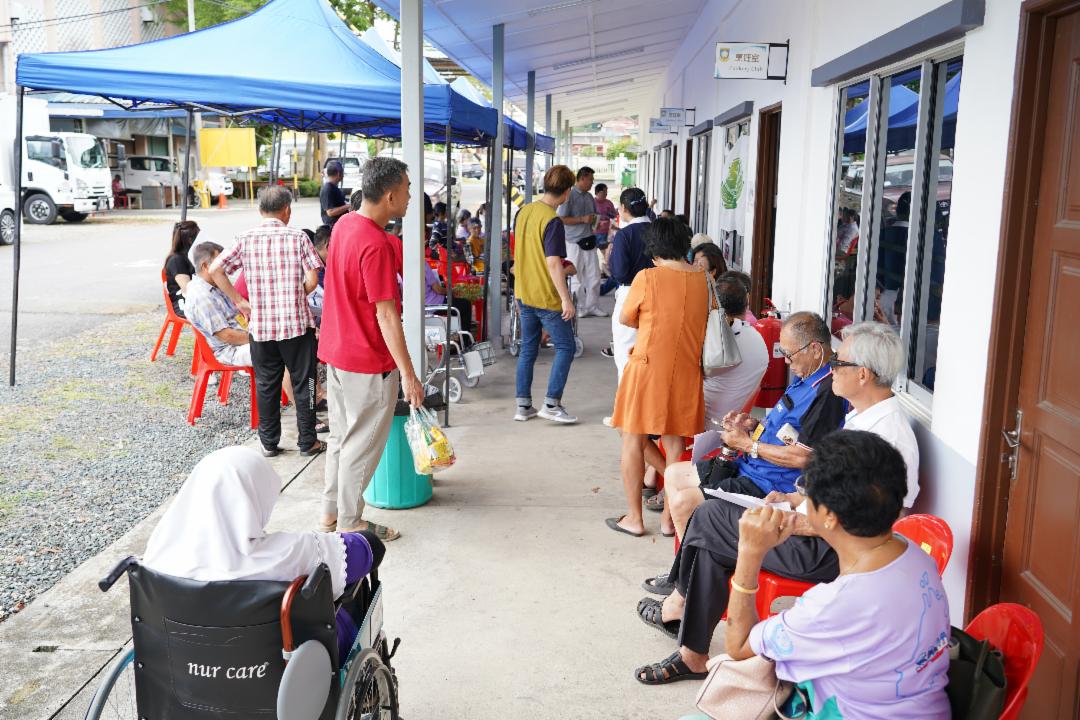
◎ Afraid of missing her chance
Before the medical team arrived at Lahad Datu Middle School on the morning of 13 June, 58-year-old Chin Vui Jin was already waiting on-site.
Seeing only a few volunteers at the venue, with no doctors, nurses or other patients yet in sight, she grew anxious.
“Is there really a free clinic today?” she asked.
Only after volunteers reassured her did she finally relax.
Vui Jin had, in fact, gone to the school the prior Saturday, thinking the clinic was already underway. Upon learning from school staff that the free clinic was scheduled for 13 June, she became worried that she might miss it again. Determined to secure her spot, she arrived well ahead of time, ultimately becoming the very first patient to register.
For Vui Jin, the clinic was a rare opportunity. She could not recall a free clinic ever being held in Lahad Datu town. She did not know what to expect; she only knew that she could see a doctor without having to pay.
“It’s not that I don’t want treatment,” she told volunteers. “I just don’t have enough money for long-term care.”
Since injuring her foot five or six years ago, Vui Jin has lived with recurring pain and cramps in her legs. Painkillers, injections and Western medical treatment brought only temporary relief, while traditional Chinese medicine, though helpful, was too costly for her to continue.
As a single mother earning a modest income at a local grocery shop, Vui Jin could only rely on painkillers and medicated ointment most days, seeking TCM treatment only when the pain became unbearable. With treatments and medication costing RM200 to RM400 per session, and some examinations costing as much as RM700 to RM800 when needed, she could only manage with occasional financial assistance from her elder sister.
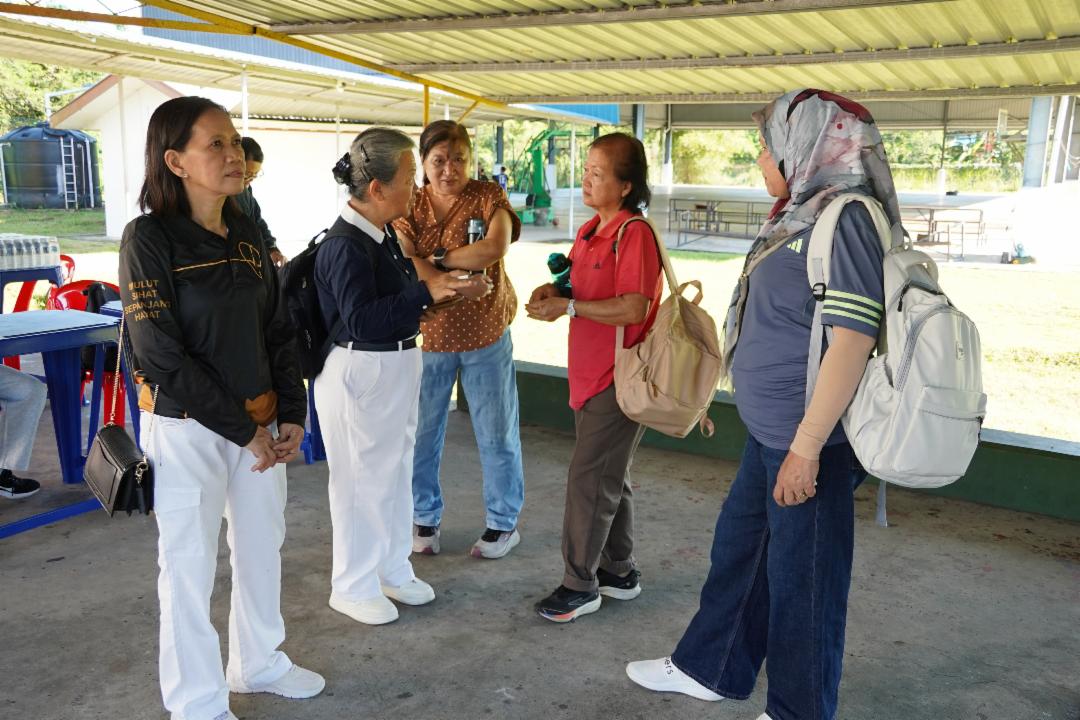
◎ One more consultation, one more chance for recovery
When the clinic began, Vui Jin first sought help at the orthopaedic department. After examining her legs, the doctor found that the cartilage in her knee had worn down, causing friction and pain when she walked.
The doctor suggested that she consult the TCM department, but Vui Jin immediately waved her hand in refusal.
TCM treatment was expensive, she explained. She could not afford it.
The doctor gently told her that TCM services were available at the clinic, and that acupuncture and medication would also be provided free of charge.
Vui Jin’s face lit up. She agreed without hesitation.
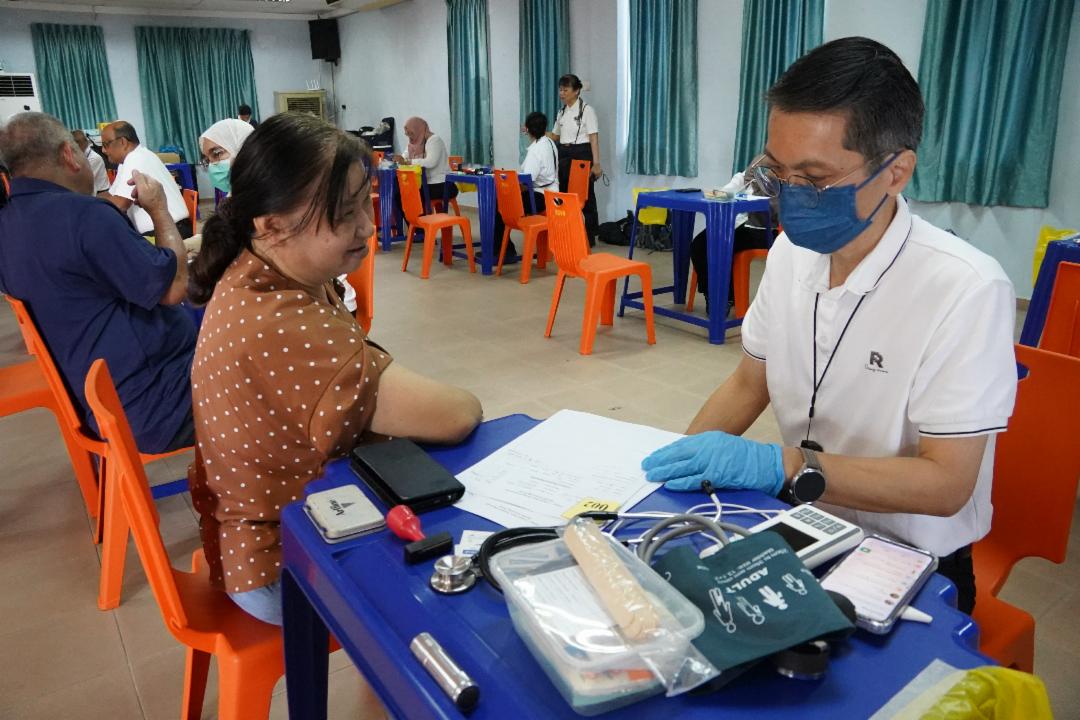
At the TCM station, practitioner Ong Boon Hock first asked whether she had eaten breakfast. When he learnt that she had come on an empty stomach, he immediately asked an assistant to bring her some biscuits.
After taking her pulse and asking further questions, Physician Ong identified signs of gout. He treated her with acupuncture and advised her on dietary adjustments.
When the treatment was over, Vui Jin stood up and was surprised to find that her legs felt much lighter. Physician Ong also taught her several simple leg exercises to help ease the pain at home.
Knowing that ongoing care was financially straining for her, Physician Ong invited Vui Jin to return the next day for a follow-up. She nodded happily. To her, another consultation meant another chance to recover.
“My son is studying at a university in Taiwan,” she said. “I hope that one day I can go there to see him. But my legs hurt, and I can’t walk far. I’m afraid I’ll become a burden to him.”
“If my legs can get better, then when I’ve saved enough for the air ticket, I can travel around Taiwan with him.”
It is a simple wish, but one that keeps her going. Vui Jin promised to watch her diet, practise the exercises and take better care of herself.
◎ An unexpected glimpse of hope
“Ah!”
The clear sound emanating from her daughter’s mouth startled Vun Yun Yee. She looked closely at the girl beside her, whose mouth opened slightly.
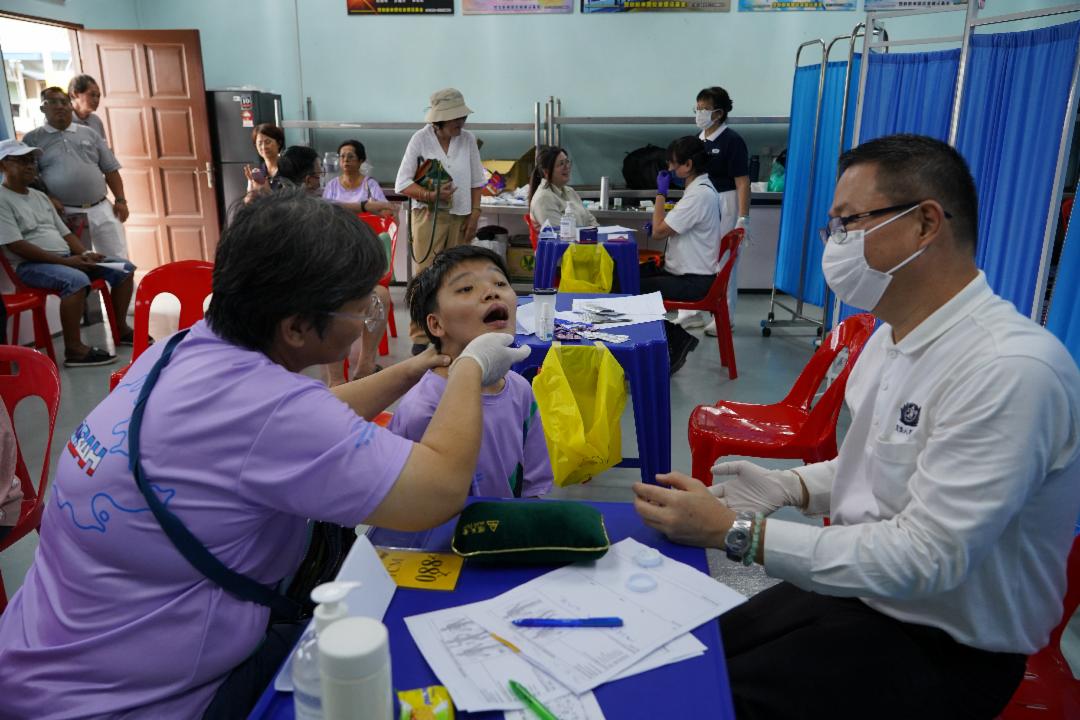
Physician Ong continued to gently massage the area around the girl’s throat, near the windpipe. He then handed Yun Yee a transparent glove, guided her hand, and showed her how to massage the same area.
“Do this for her every day,” he said. “It may help her make sounds.”
As Physician Ong demonstrated, he watched carefully to make sure Yun Yee was pressing the correct area with the right movement.
Yun Yee was visibly emotional. For more than ten years, she had longed to hear her youngest daughter speak. Now, a simple massage technique had given her a glimpse of hope.
Yun Yee has three children. When her youngest daughter was still unable to speak at the age of three, she took her from place to place for medical checks. Tests showed that the girl’s hearing was normal.
Now in her teens, her daughter is lively and active, though her emotions can fluctuate greatly, requiring patient care and companionship. For the past ten years, she has studied at the Sabah Society for the Deaf, Lahad Datu Branch. With the guidance of her teachers, she has learnt to write her own name. However, she remains unable to speak, leaving Yun Yee worried and helpless.
“Recently, she hasn’t been sleeping well. She often wakes up frightened and breaks out in cold sweat,” Yun Yee said.
She had taken her daughter to Western doctors, but the treatment had little effect. TCM treatment had helped improve her sleep, but the cost of long-term treatment was difficult for the family to bear.
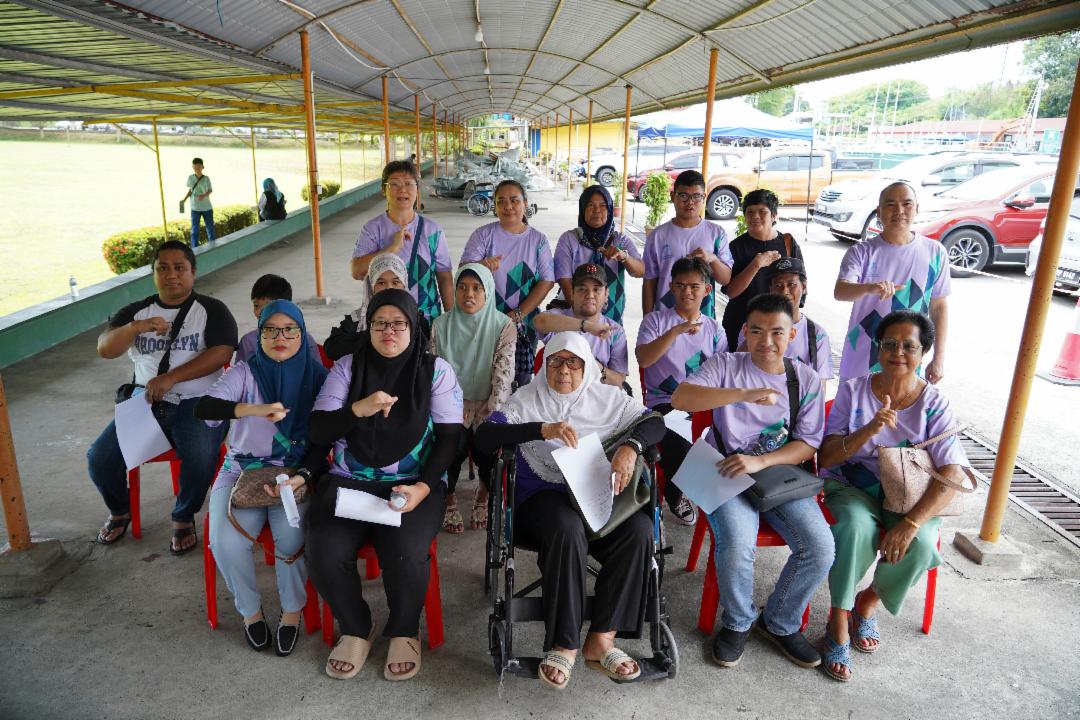
When Yun Yee heard that Tzu Chi was holding a free clinic with TCM services, she was delighted. She came together with 17 others from the Society for the Deaf, including the chairperson, students, parents, teachers and alumni.
At first, Yun Yee only hoped the TCM practitioner could check her daughter’s health. She did not expect to leave with renewed hope.
Physician Ong patiently interacted with her daughter, encouraging her to open her mouth and try to make a sound. Again and again, he guided her gently. He even made a pinky promise with her, a small gesture that deeply moved Yun Yee.
Yun Yee, who now serves on the committee of the Society for the Deaf, said Lahad Datu has both Western and TCM clinics, but she had never seen such a large-scale, multi-specialty free clinic.
She was also touched by the volunteers’ attentiveness. By early morning, the TCM area was already full, with chairs extending into the corridor. As 20 to 30 people waited, volunteers moved among them with warm greetings, bread and bottled water.
Although Yun Yee’s daughter had registered late and was arranged as the final patient, Yun Yee did not complain. Instead, she was moved that the doctors continued seeing patients beyond scheduled hours, unwilling to let anyone leave without being attended to.
“I heard that the doctors and volunteers paid their own way to come all the way from Peninsular Malaysia,” she said. “That’s really remarkable.”
Their dedication and compassion, she added, were deeply admirable. She hoped those who received help would one day pass it on.
“We really need clinics like this,” she said. “It was organised with so much care. For us, it meant a great deal.”
◎ Seeing the suffering beyond illness
For Dr. Yap Chorng Meow, the clinic offered a lesson that could not be learned in a consultation room.
“It turns out that a patient’s real suffering is not only on the sickbed,” he said.
This was Dr. Yap’s first time taking part in a Tzu Chi free clinic. In addition to seeing patients on site, he made house calls alongside volunteers, coming face-to-face with the realities behind illness.
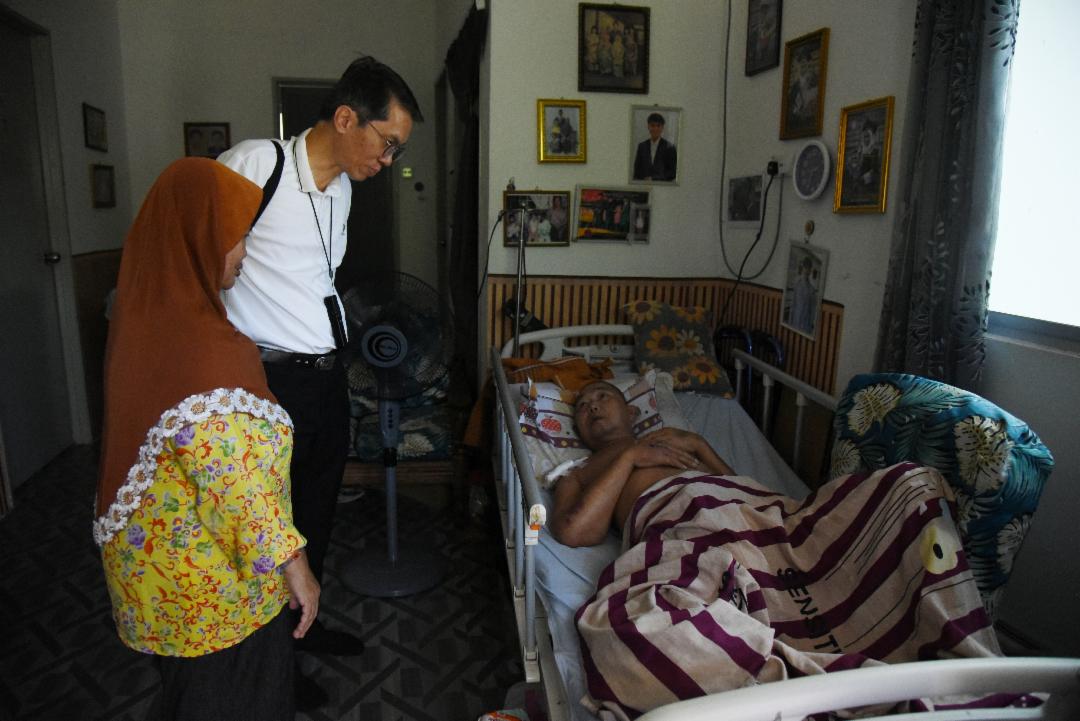
After the first day of consultations, Dr. Yap joined volunteers to visit a kidney patient at home. The house stood amid a forested area. As the group entered, they were met by heavy, humid air.
On the bed lay an elderly Malay man with kidney failure caused by high blood pressure. He requires dialysis three times a week, with each session lasting four hours. For years, he had undergone dialysis through a fistula in his arm, but after his blood vessels became damaged, he now relies on a catheter in his neck.
As Dr. Yap spoke with the man’s wife, he realised that the family’s burden went far beyond illness.
Her husband, she explained, had become paralysed and bedridden after a fall. He also has a pacemaker and is no longer able to work. Although, as a Malaysian citizen, he pays only RM15 for each dialysis session, and the hospital will help him apply for free dialysis, the family still has RM500 in outstanding medical fees.
Transportation cost is another heavy burden. Because her husband is not mobile, three strong neighbours are needed each time to help carry him to dialysis. A return trip costs RM40. In a month, transportation cost alone can exceed RM500, an amount the family can barely manage.
The household receives RM900 in welfare assistance each month, but little remains after daily expenses and the RM200 they send to their daughter studying in Kota Kinabalu. When money for transport runs short, the elderly man has no choice but to reduce his dialysis sessions.
As she spoke, the elderly woman’s eyes reddened. Her son had also died of cancer, a loss that still weighed heavily on her. Overcome with grief, she began to cry.
Volunteer Wong Shew Fun quickly stepped forward to comfort her. She explained that the visit was not only to understand her husband’s medical condition, but also to document the family’s circumstances. Tzu Chi would assess the case for providing transport assistance, so he could attend dialysis regularly.
The elderly woman seemed reassured. She nodded repeatedly in gratitude, and the worry on her face slowly eased.
Listening to hardship after hardship, Dr. Yap was deeply moved.
“In the clinic, we usually ask about the condition, give treatment, and that’s where it ends,” he said. “But during this home visit, I saw the suffering beyond the illness.”
Doctors, he reflected, often see patients through their symptoms. This visit showed him the patient’s living environment, financial pressure and the quiet burden carried by family members.
He came to understand that medical consultations alone cannot solve every problem. Seeing how Tzu Chi’s medical team was able to provide care that reached into different aspects of life through home visits, he was inspired.
“I didn’t know much about Tzu Chi before,” he said. “But after seeing what Tzu Chi volunteers do with my own eyes, I was truly moved. It’s something I’ll never forget. If Tzu Chi holds free clinics again, and if time permits, I’ll definitely take part.”
Dr. Yap had brought along his son, a medical student currently doing his internship, hoping they could spend time together and see a part of Sabah they had never visited before. Unexpectedly, he found himself deeply moved by Tzu Chi’s respect for life and people-centred care.
●
The free clinic came to a close, but one image stayed with Dr. Yap and the volunteers.
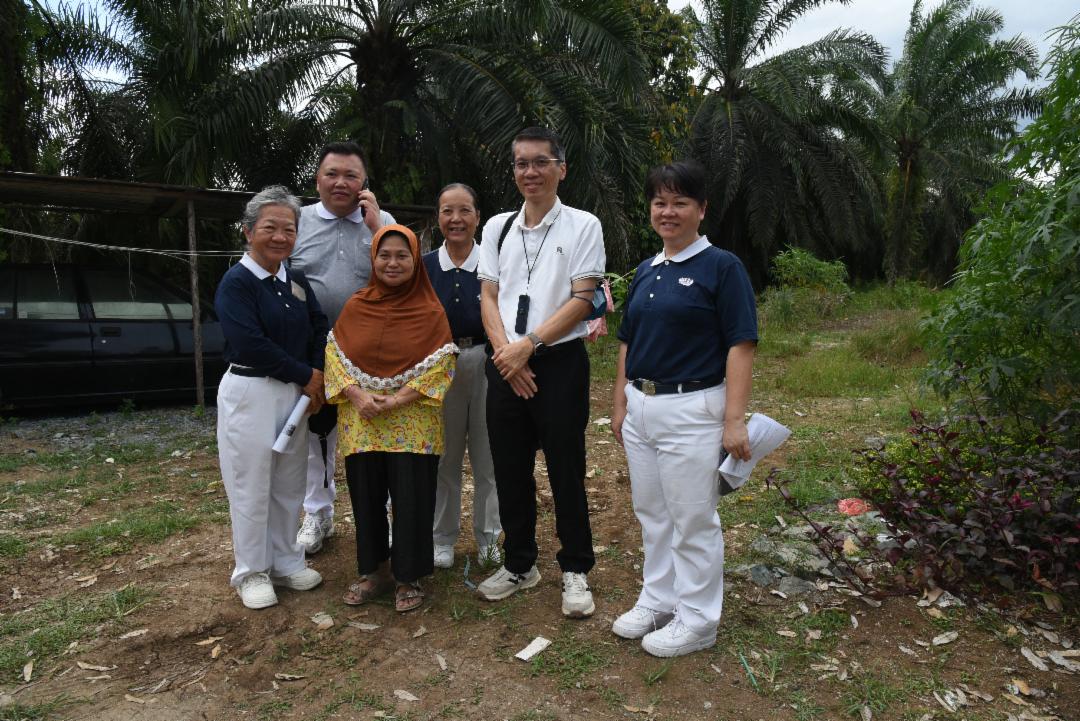
As they were about to leave the elderly woman’s home after the visit, she warmly invited everyone to take a group photo. In that moment, what remained was more than a smile. It was the quiet relief of someone who had been seen, understood and cared for.
This was what the clinic brought to Lahad Datu: not only medical care, but also hope for those living with illness and hardship, and a reminder of how deeply love can touch lives.

